Hivemind Autonomy Platform
The AI-powered, modular autonomy software platform for rapid development and deployment to intelligent machines.
The Challenge
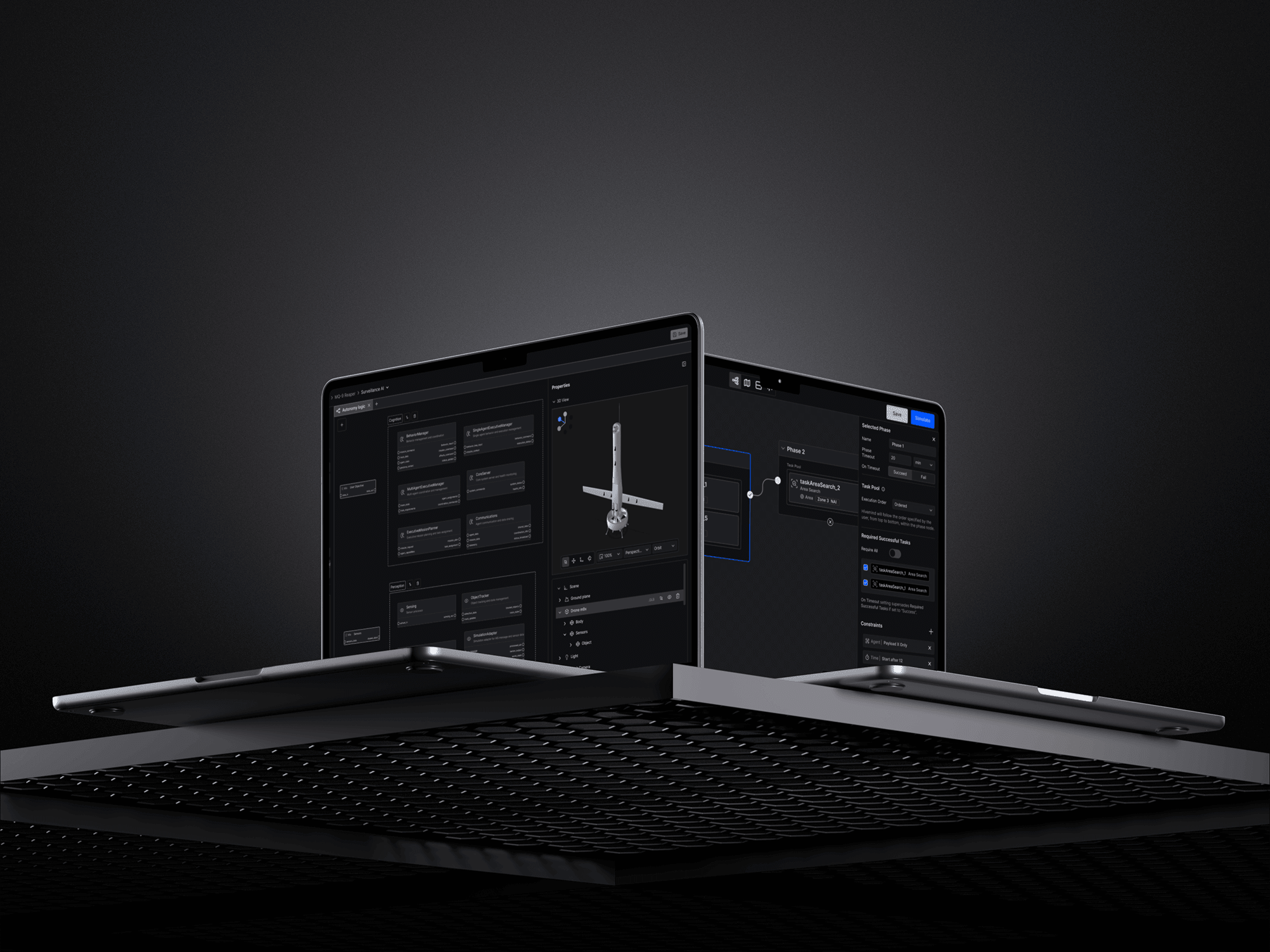
Shield AI's Hivemind autonomy platform enables engineers to develop, test, and deploy AI pilots for autonomous aircraft across defense and commercial aviation. The platform supports the entire autonomy lifecycle, from simulation and testing to hardware-in-the-loop validation and live operations.
The problem is that autonomy development is inherently complex. Engineers need to design scenarios, configure AI agents, run simulations, analyze metrics, and deploy to physical systems, all while maintaining clarity about what's happening and why. Without thoughtful design, users either drown in technical complexity or lose trust in the system.
The core design challenge: how do you make mission-critical autonomy development clear, trustworthy, and fast without oversimplifying the sophisticated workflows that domain experts require?
Approach
I joined Shield AI to build the product design function from the ground up. This meant establishing both the team structure and the design philosophy that would guide how we solve problems.
Building the Team
I structured the design organization around the autonomy lifecycle. We have designers focused on development (scenarios, agents, missions), testing (metrics, dashboards, analysis tools), and operations (HIL, ground control, deployment). Each designer owns end-to-end experiences within their domain while collaborating across the full user journey. I also embedded design systems and research as core functions from day one.
Discovery-Led Design
Autonomy engineering is a specialized domain. Early on, I led extensive user research through interviews and shadowing sessions with autonomy engineers, test operators, and domain experts. These deep dives revealed that the biggest friction wasn't lack of features. It was cognitive overload and opacity. Users needed to understand system state, trace decisions, and move quickly between development phases without losing context.
Design Principles as North Star
Rather than design by feature request, we established five core principles that guide every decision. Clarity means organizing complexity through hierarchy and progressive disclosure. Trust comes from making system behavior transparent and traceable. Insight turns data into actionable understanding. Velocity minimizes friction in iteration loops. And craft means sweating the details because trust compounds from quality.
These principles aren't aspirational. They're decision-making tools. When evaluating designs, we ask: does this increase clarity? Does it build trust? Does it help users move faster?
Solution Highlights
End-to-End User Flows Across the Lifecycle
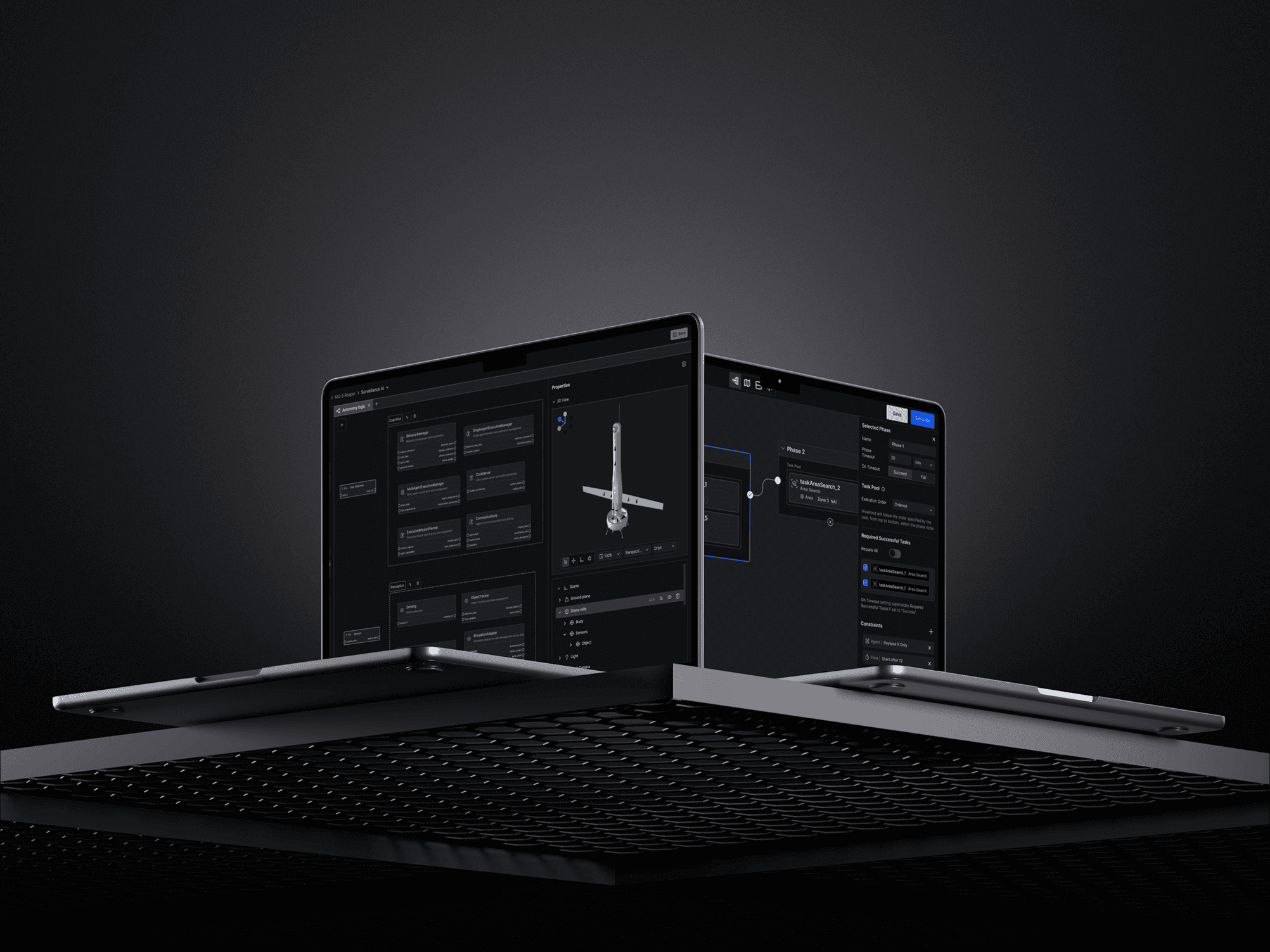
I designed cohesive workflows that span simulation (SIL), hardware-in-the-loop testing (HIL), agent configuration, and mission deployment. The information architecture supports both quick-start paths for new users and deep investigation for experts, with stateful navigation that remembers context as users move between phases.
AI Task Automation & Agent Designer
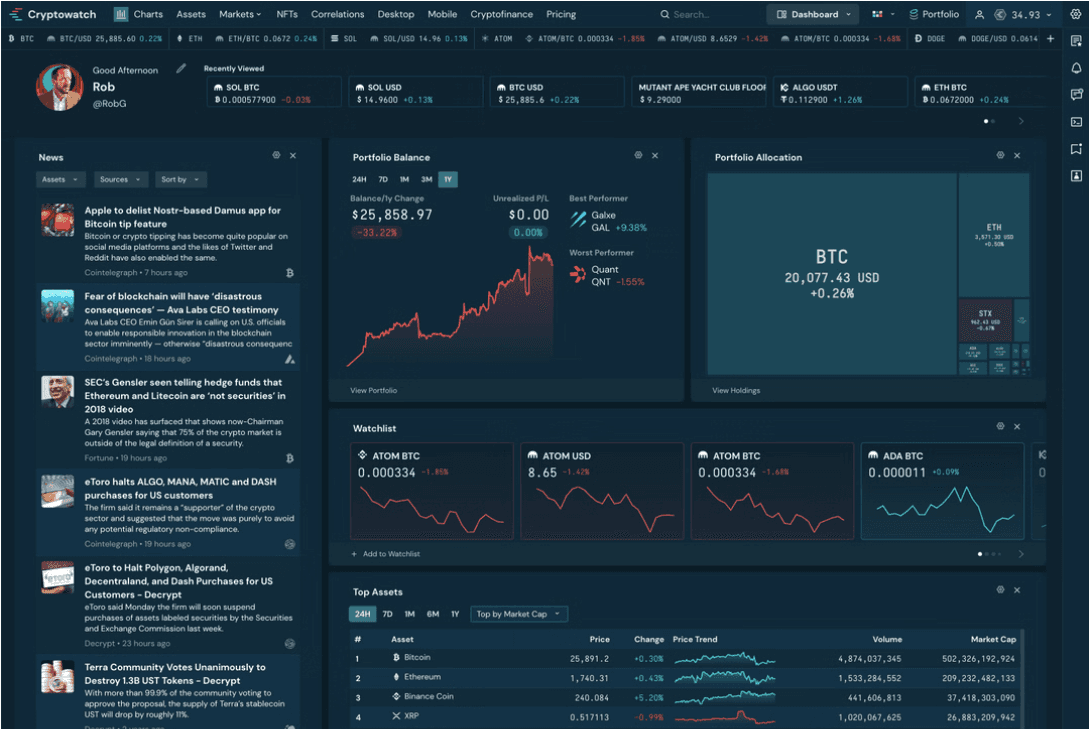
Created low-code interfaces that enable autonomy engineers to build, configure, and test AI agents without writing code for every parameter change. The design balances power-user efficiency through keyboard shortcuts and bulk operations with discoverability for less frequent users.

Metrics & Dashboards for Test Analysis
Designed data visualization and analysis tools that help engineers quickly identify patterns, outliers, and failure modes. Rather than dumping raw telemetry, the interface surfaces insights about what failed, why it matters, and what to investigate next.
Design System Foundation
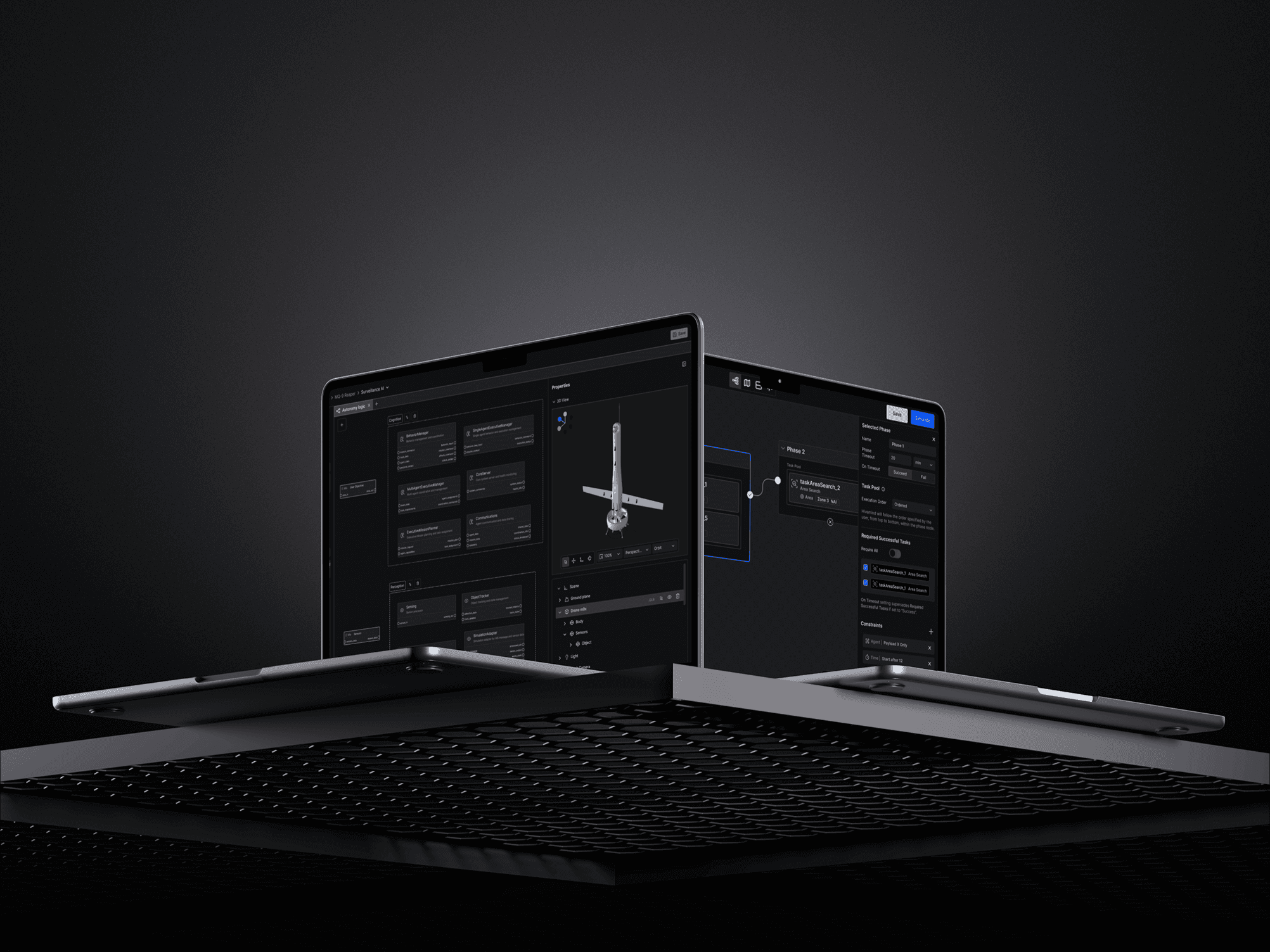
Established a scalable component library in Figma with documented patterns for navigation, data density, error states, and real-time status indicators. The system reduces implementation time while maintaining visual consistency and accessibility standards across the platform.
Impact & Results
Increased Adoption Across the Autonomy Lifecycle
By adding key workflows like SIL/HIL testing, simulation environments, and agent configuration tools, we expanded platform usage across the full development cycle. Engineers now iterate faster because they can move seamlessly between design, test, and deployment without switching tools.
Faster Iteration Loops
Reduced cognitive load and streamlined information architecture enable autonomy engineers to run more test cycles per day. When users can quickly understand test results and trace system behavior, they spend less time debugging and more time improving AI performance.
Team & Operating Model
Built a cross-functional design team with embedded roles in product squads. Established a discovery-driven process where design co-owns outcomes with product and engineering. No designs thrown over the wall. The team now operates with consistent principles, shared components, and a culture of craft.
Reflections
Designing for domain experts requires humility. Early on, I learned that autonomy engineers don't need simplification. They need organization. The goal isn't to hide complexity but to structure it so users can navigate confidently.
The biggest insight: trust isn't built through polish alone. It's built through transparency. When engineers can trace why a decision was made or why a test failed, they trust the system to handle mission-critical work. That's where design principles like trust and insight become essential. Not just philosophical, but tactical.
If I were starting over, I'd invest even more in early prototyping with real users in the loop. We learned the most when engineers could interact with working prototypes during testing sessions, not just static mocks. That feedback loop of watching domain experts use the tools under real conditions revealed edge cases and workflow friction we'd never have anticipated.
Want to learn more about this work? Unfortunately, detailed visuals and specifics are under NDA, but I'm happy to discuss the design process, team structure, and strategic decisions in more depth.